

Laundry Pods vs Powder Detergent: Which Is Better?
Aug 28, 2026
Leave a message

Overview
When comparing laundry pods vs powder detergent, the key question is not simply which one cleans better. The format can affect how a product is dosed, used, packaged, and positioned in the market. For a buyer sourcing laundry detergent, these differences can also influence which format is easier to develop and sell.
This guide compares laundry pods and powder detergent from both the product and sourcing perspective. It looks at how the two formats differ in everyday use and what those differences mean when selecting a format for an OEM or private label laundry product.
Laundry Pods vs Powder: Key Differences
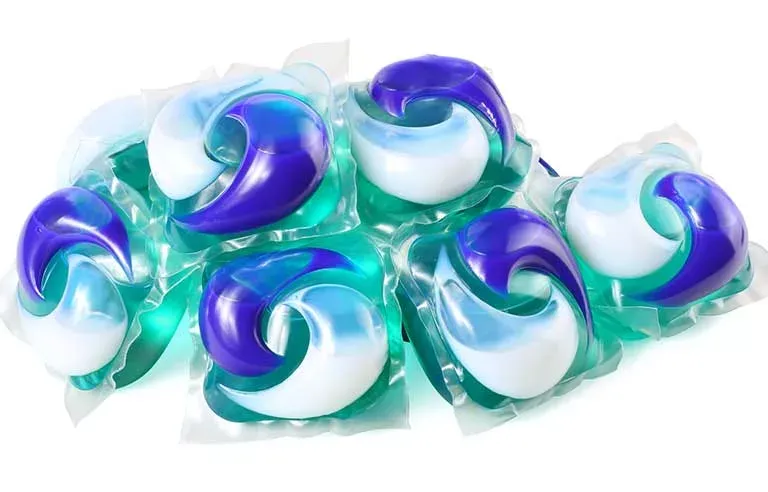
The main difference between laundry pods and powder detergent is how the detergent is formulated, measured, and delivered during the wash.
|
|
Laundry Pods |
Powder Detergent |
|
Dosage |
Pre-measured |
User measures each load |
|
Format |
Concentrated, water-soluble pod |
Dry powder |
|
Handling |
No measuring required |
Requires a measuring step |
|
Dosing flexibility |
Fixed dosage |
Dosage can be adjusted |
|
Moisture sensitivity |
Film and formula require controlled storage |
Moisture can cause caking |
|
Product development |
Weight, chambers, formula, fragrance, and packaging can be customized |
Greater flexibility with some dry ingredients |
Neither format is automatically better. The right choice depends on the product concept, target use, and requirements of the market.
How Laundry Pods Work
Laundry pods use a pre-measured dose of concentrated detergent.
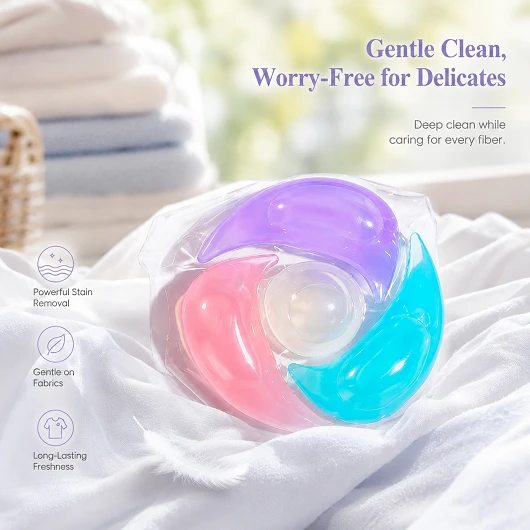
Each pod contains a defined amount of detergent inside a water-soluble film. Depending on the formulation, it may contain surfactants, enzymes, builders, fragrance, polymers, and other cleaning ingredients. The film dissolves during the wash cycle and releases the detergent.
The main product advantage is consistent dosing. Users do not need to measure detergent for each load, which makes the format easier to use and gives the product a more controlled dose.
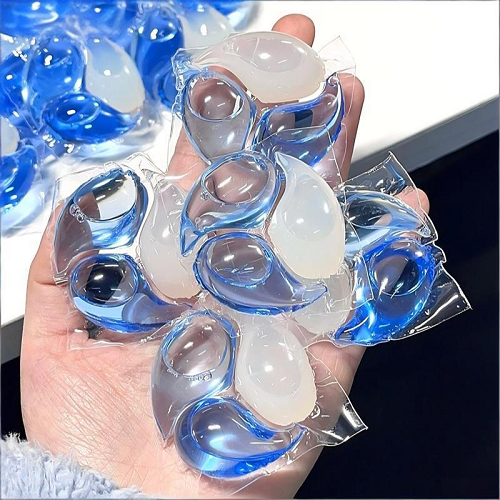
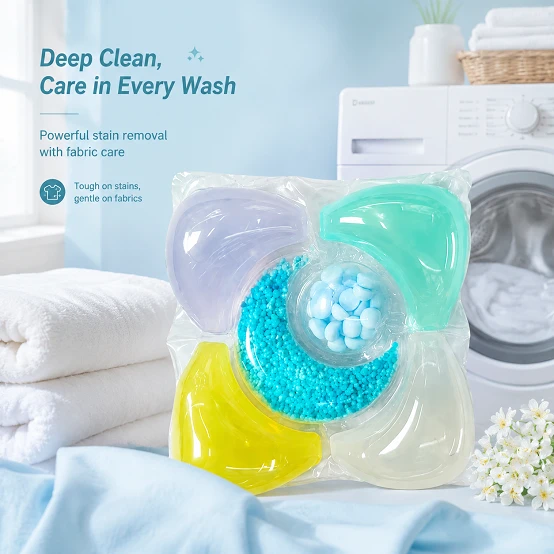
For an OEM or private label laundry product, the pod format also allows several elements to be developed around the target market. Pod weight, chamber structure, formula concentration, fragrance, color, and packaging can all be considered during product development.
How Powder Detergent Works
Powder detergent is a dry formulation that allows more flexible dosing.
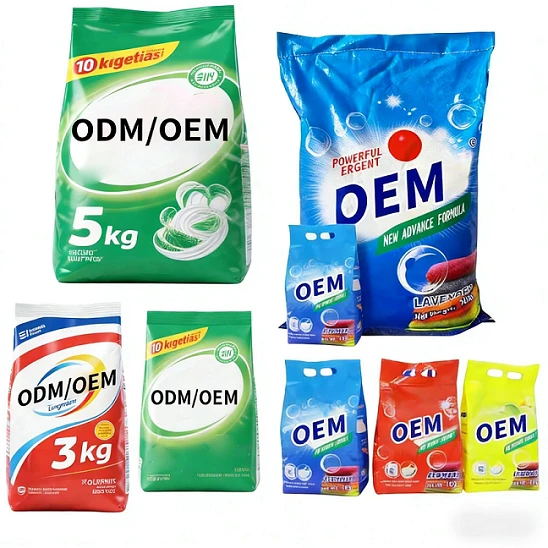
It can contain surfactants, builders, enzymes, oxygen-based bleaching agents, anti-redeposition agents, and other functional ingredients. Because it is a dry format, manufacturers have flexibility with certain solid ingredients, while users can adjust the amount according to the load and product instructions.
This makes powder detergent a practical option when flexible dosing and cost control are important.
The main storage consideration is moisture. If powder absorbs moisture, it can form lumps or cake, which may make the product harder to measure and dissolve.

Cleaning Performance
Laundry pods and powder detergent can both deliver strong cleaning performance. The format itself does not determine how well a detergent cleans. What matters more is whether the formulation, dosage, and wash conditions are properly matched.
This is why two detergents in the same format can produce different results. Surfactants, enzymes, builders, and other functional ingredients need to work together at the right dosage for the stains and washing conditions the product is designed to handle.
Stain Removal
Different stains require different cleaning mechanisms.
Protein-based stains, such as food and grass, can benefit from enzyme systems. Greasy soils rely more heavily on surfactants and overall formulation balance, while mineral and particulate soils may require effective builders and anti-redeposition systems.
For a laundry pod manufacturer or powder detergent supplier, the key consideration is therefore not simply the format. The formulation should be developed around the target stains, water conditions, washing temperature, and intended dosage.
For private label laundry products, this is particularly important. A product designed for one market or washing habit may need a different formulation approach from one developed for another.
Cold Water Washing
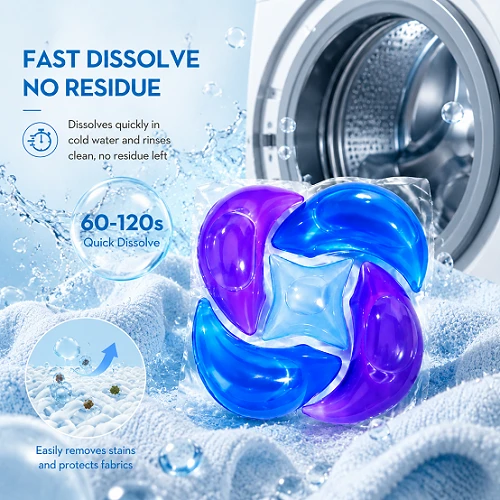
Cold-water washing puts more emphasis on dissolution and wash performance.
Powder detergent needs to dissolve and disperse properly during the wash. If the formulation or storage conditions are unsuitable, undissolved powder may leave residue.
With laundry pods, the water-soluble film and concentrated formulation also need to release and disperse effectively at lower temperatures. Film performance, formulation viscosity, dosage, and wash conditions all affect the result.
For manufacturers, cold-water performance should be confirmed through product testing, rather than assumed from the detergent format alone.

Hard Water and Detergent Choice
Water hardness can affect laundry detergent performance, especially in markets with high levels of calcium and magnesium. These minerals can interact with cleaning ingredients and reduce their effectiveness if the formulation is not designed for the local water conditions.
For both laundry pods and powder detergent, the more important consideration is the formulation's builder and water-softening system, rather than the detergent format itself.
For buyers developing a private label laundry product, three points are worth considering:
- Hard water affects cleaning: Builders help manage calcium and magnesium in the wash water, supporting surfactant performance.
- Formulation differs by format: Powder detergent may offer more flexibility with some dry ingredients, while laundry pods can also be formulated for hard-water conditions.
- Market conditions matter: A private label laundry product should be formulated and tested according to the water hardness of its target market.
Cost Per Load
Powder detergent generally has a lower cost per load than laundry pods. Its production and packaging structure can be simpler because it does not require a water-soluble film for each dose.
Laundry pods usually have a higher production cost, but cost per load is not the only factor to consider. The pre-measured format can help control detergent usage and reduce dosing variation between users.
The Cost of Dosing
For buyers comparing laundry pods vs powder detergent, dosing can affect the actual cost of use.
- Powder detergent: Lower unit cost, but users control the amount used for each load.
- Laundry pods: Higher unit cost, but each load receives a defined dose.
- For multi-user settings: Controlled dosing can help reduce overuse and inconsistent detergent consumption.
The better choice depends on whether the target market prioritizes lower cost per wash or more controlled product usage.

Convenience, Storage and Packaging
Laundry pods offer a simpler user experience, while powder detergent provides more dosing flexibility. A pod can be placed directly into the washing machine without measuring, while powder requires users to decide how much detergent to use.
For product development, these differences can also affect positioning and packaging:
- Laundry pods: Simple dosing, controlled usage, and a convenient format.
- Powder detergent: Flexible dosing, larger pack options, and a lower-cost positioning.
Storage is another consideration. Powder detergent needs protection from moisture, which can cause clumping. Laundry pods also require moisture protection because the water-soluble film can be affected by unsuitable storage conditions.
For a private label laundry product, packaging should protect the product during transportation, warehousing, and retail handling. Package type, moisture protection, unit count, and carton configuration should be considered together with the product format.

Which Format Is Better for Private Label?
For a private label laundry detergent, the better format depends on the target market, product positioning, and expected price point-not simply on which format a factory already produces.
Choose Laundry Pods When Convenience Matters
Laundry pods are a good fit when controlled dosing and ease of use are central to the product.
They can work well for markets that are receptive to pre-measured detergent and a more convenient product format.
Choose Powder When Cost Matters
Powder detergent can be a better fit when lower cost and flexible dosing are priorities.
It may also suit markets where powder is already widely used or where larger, price-sensitive packs are common.
Make the Decision
Before choosing a format, buyers should assess:
- Target market: What detergent format do local consumers already use?
- Price position: How much does the product need to cost per wash?
- Product experience: Is convenience or dosing flexibility more important?
- Local conditions: Do water hardness and washing habits affect the formulation?
The right choice is the format that fits the market and product strategy, rather than simply the format with the lowest production cost.

How Manufacturers Improve Laundry Pod Production Efficiency
For a laundry pod manufacturer, production efficiency is not simply about running machines faster. The real value of automation is the ability to maintain consistent production while reducing unnecessary manual handling.
Automated pod production can help improve several areas that matter in repeat manufacturing:
- Pod weight consistency: Each pod is produced closer to the agreed weight specification.
- Filling accuracy: Automated filling helps keep the detergent amount more consistent from pod to pod.
- Sealing control: Controlled sealing helps reduce variation during production.
- Batch consistency: Repeat batches can follow the same production parameters and product specifications.
- Production scalability: Automation makes it easier to increase order volume without relying on the same level of manual handling.
For high-volume OEM or private label projects, this becomes important when moving from samples to repeat orders. The goal is not simply higher output, but consistent product specifications across batches.
At Youming Group, automated laundry pod production systems support customized, high-volume orders. For B2B buyers, this helps create a more consistent path from sample approval to repeat production.
When selecting a laundry pod manufacturer, production efficiency should be considered alongside formulation control, quality management, packaging, and batch consistency.

What Should B2B Buyers Compare?
If you are sourcing laundry detergent for your own brand, comparing the product format is only the first step. A supplier should also be evaluated on whether it can support the product from development through repeat production.
Product Development
Check how much of the product can be customized.
- Formula and dosage: Can the supplier develop the product around your target market?
- Product details: Can pod weight, fragrance, color, or cleaning functions be adjusted?
- Packaging: Can the supplier support your required packaging format and artwork?
A supplier with only fixed formulas may offer less flexibility for product differentiation.
Manufacturing Capability
Look beyond production capacity and check consistency at your expected volume.
- Equipment and automation: Can the production system support the required order volume?
- Quality control: How is consistency monitored during production?
- Repeat orders: Can the supplier maintain the same specification across batches?
The right factory is not necessarily the one with the largest capacity, but the one that can reliably match your volume and specifications.
Quality and Compliance
Confirm that the documentation applies to the actual product and manufacturing site.
Depending on the target market, buyers may need to review product documentation, safety information, testing, and labeling requirements.
Do not evaluate certifications or test reports as general company claims. Check what product, site, and scope they actually cover.
Commercial Fit
Compare the full sourcing process, not just the initial quotation.
- MOQ and lead time: Do they fit your purchasing plan?
- Samples and customization: Is the development process clear and practical?
- Supply capability: Can the supplier support repeat orders as demand grows?
A lower quotation may not mean lower sourcing cost if quality or delivery becomes inconsistent.


Laundry Pods vs Powder: Which Should You Choose?
If you are developing a modern laundry product with a clear retail position, laundry pods are the stronger choice. Powder detergent can work well for highly price-sensitive markets, but laundry pods offer better opportunities for controlled dosing, convenience, product differentiation, and higher-value positioning.
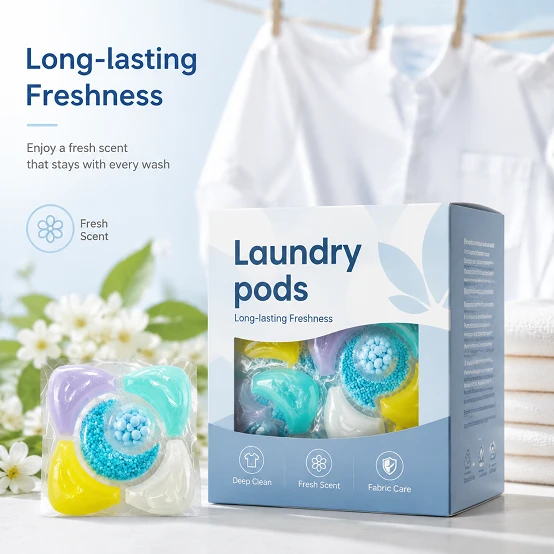
For private label and OEM buyers, laundry pods are worth considering when the goal is to build a product that stands out rather than compete mainly on price. The right laundry pod manufacturer can support this with formulation development, customized specifications, packaging, and consistent production.
FAQ
Are laundry pods better than powder detergent?
Laundry pods are a stronger choice for controlled dosing and convenience, while powder is better suited to flexible dosing and lower-cost positioning.
Which is cheaper, laundry pods or powder?
Powder detergent is generally cheaper per wash because it does not require individual water-soluble film encapsulation.
Are laundry pods good for cold water?
Laundry pods can work well in cold water when the film and formulation are designed and tested for low-temperature washing.
Is powder detergent better for hard water?
Not necessarily, as both powder and laundry pods can be formulated for hard-water conditions with the right builder system.
Can a manufacturer customize laundry pods for a private label brand?
Yes, manufacturers can customize laundry pods based on requirements such as formula, pod weight, fragrance, color, and packaging.