

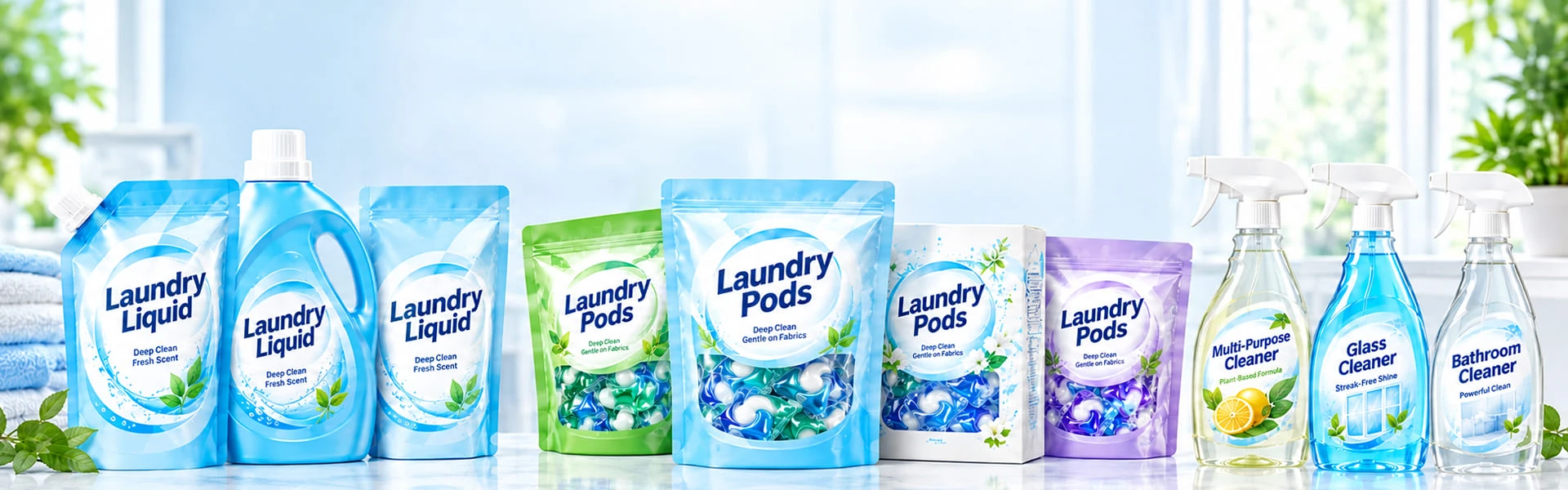
Differences between Regular vs Concentrated Laundry Liquid
May 19, 2026
Leave a message

Regular vs Concentrated Laundry Liquid
Laundry liquid detergents are generally divided into two main types: regular formulas and concentrated formulas.
Over the past few years, the industry has gradually shifted toward concentrated systems as brands look for better efficiency, lower shipping weight, and more sustainable packaging solutions.
However, many consumers and even some new brands still find it difficult to clearly understand what actually makes these two types different in real use.
This comparison will help clarify the key differences and how they impact performance, cost, and everyday usage.

What Is Regular Laundry Liquid?
Regular laundry liquid is a traditional detergent format that contains a relatively high percentage of water. In this type of formula, water acts as a carrier that helps dissolve and distribute cleaning ingredients, ensuring stable flow and easy usage.
A typical regular detergent may include ingredients such as surfactants, fragrance, preservatives, colorants, enzymes, and foam stabilizers. However, water often makes up a large portion of the total formula.
This is why regular laundry liquids are usually:
- Larger in bottle size
- Heavier in weight
- More expensive to transport
- Less space-efficient in storage
For decades, this format has been the industry standard in most retail markets worldwide.
Advantages of Regular Laundry Liquid
Despite the shift toward concentrated systems, regular laundry liquid is still widely used due to familiar consumer habits and strong retail presence.
Many consumers are used to large bottles, full-cap dosing, and higher foam levels, which are often perceived as a sign of stronger cleaning performance.
In addition, regular detergents often appear more affordable at first glance because of their larger volume packaging.
Limitations of Regular Laundry Liquid
While still common, regular laundry liquid has several structural inefficiencies.
Because of its high water content, it leads to higher transportation costs, increased fuel consumption, and greater warehouse storage requirements. This becomes especially significant in cross-border trade and export operations.
It also requires larger plastic packaging, which increases material usage and overall environmental burden.
In addition, because the formula is diluted, consumers often need higher dosing volumes per wash, which reduces long-term efficiency.

What Is Concentrated Laundry Liquid?
Concentrated laundry liquid is formulated with reduced water content and a higher proportion of active cleaning ingredients. Instead of relying on volume, it focuses on cleaning efficiency per dose.
Modern concentrated formulas may include high-performance surfactants, enzyme systems, low-foam technology, fabric-safe agents, and advanced fragrance delivery systems.
The goal is to achieve equal or stronger cleaning performance using a smaller amount of liquid.
Understanding Concentration Levels
One of the most common confusion points for buyers is concentration labeling, such as 2X, 4X, or ultra-concentrated formulas.
In simple terms, a higher concentration means:
- Less water
- Smaller dosage per wash
- Higher active ingredient density
For example, typical dosage ranges may look like this:
|
Type |
Dosage per wash |
|
Regular detergent |
60–100ml |
|
2X concentrated |
30–50ml |
|
Ultra concentrated |
15–30ml |
Actual usage still depends on washing machine type, water hardness, fabric load, and soil level.
Why Concentrated Laundry Liquid Is Growing Globally
The shift toward concentrated detergents is largely driven by logistics efficiency and sustainability requirements.
In regions such as Europe, North America, Japan, and major e-commerce markets, brands are increasingly adopting concentrated systems.
One major advantage is lower shipping weight, as removing water significantly reduces freight cost across ocean transport, trucking, and last-mile delivery.
It also improves e-commerce efficiency by reducing packaging volume, lowering leakage risk, and optimizing warehouse storage.
In addition, smaller packaging formats reduce plastic usage and carton consumption, supporting sustainability targets set by retailers and brands.

Comparison: Regular vs Concentrated Laundry Liquid
|
Feature |
Regular Laundry Liquid |
Concentrated Laundry Liquid |
|
Water Content |
Higher, often used as a filler base |
Lower, replaced with active ingredients |
|
Bottle Size |
Larger due to diluted formula |
Smaller due to higher concentration |
|
Cleaning Efficiency per ml |
Lower, requires more product per wash |
Higher, achieves same or better cleaning with less dosage |
|
Dosage Cost per Wash |
Higher in long-term use |
Lower due to reduced consumption |
|
Shipping & Logistics Efficiency |
Less efficient due to water weight |
More efficient, reduces freight cost significantly |
|
Packaging Sustainability |
Higher plastic usage per use cycle |
Reduced packaging waste and material usage |
|
Storage & Warehouse Efficiency |
Requires more space per unit |
More compact, improves storage density |
|
E-commerce Suitability |
Moderate, higher shipping cost impact |
Strong, optimized for cross-border logistics |
|
Industry Adoption Trend |
Still common in traditional retail markets |
Increasingly preferred in private label & export markets |

Does Concentrated Laundry Liquid Clean Better?
Many consumers assume concentrated detergent simply means a smaller bottle, but modern formulations are often more advanced in design.
They may include multi-enzyme systems, fast-dissolving surfactants, low-foam technology, and cold-water compatibility, all of which contribute to improved stain removal and better rinsing performance.
Key Cleaning Benefits
When properly formulated, concentrated detergents can provide:
- Strong stain removal
- Better grease breakdown
- Reduced residue
- Improved rinse efficiency


Global Trend in Concentrated Detergents
Low Foam Detergent Technology Trends
Low-foam enzyme technology has become an important trend in modern detergent development.
These systems are particularly suitable for high-efficiency (HE) and front-load washing machines, where excessive foam can affect rinsing performance.
Enzymes help break down common stains such as sweat, food residue, proteins, and oil, improving cleaning efficiency at lower wash temperatures.
Why Brands Choose Concentrated Detergents
In OEM and private label manufacturing, concentrated laundry liquid is increasingly preferred due to its export and cost advantages.
Smaller packaging allows more units per shipping container, improving freight efficiency and reducing cost per wash.
It also supports flexible packaging formats such as refill pouches, compact bottles, and e-commerce-ready packaging systems.
As a result, concentrated detergents are often positioned as premium and eco-friendly products in international markets.


Practical Usage and Safety
Cold Water Performance
Modern concentrated detergents are generally designed for cold-water performance.
They dissolve faster and maintain enzyme stability at lower temperatures, making them suitable for energy-saving washing cycles.
This is particularly important in European markets and households using high-efficiency machines.
Sensitive Skin Considerations
Concentration alone does not determine skin safety. The overall formulation matters more.
Many modern detergents are designed with brightener-free, phosphate-free, and low-irritation systems to improve skin compatibility.
However, consumers with sensitive skin should still consider fragrance levels, dye content, and dermatological testing when selecting products.
How to Use Concentrated Laundry Liquid Correctly
One common issue with concentrated detergent is overdosing, as many users continue using the same habits developed for regular detergents.
Excess detergent use may lead to residue buildup, poor rinsing, fabric stickiness, and washing machine accumulation.
General dosage varies depending on concentration level and machine type, but typical ultra-concentrated usage is:
- Front-load washer: 30–40g
- Top-load washer: 30–40g
- Hand wash: 15–20g
Dosage should always be adjusted based on load size, soil level, and water conditions.
What Buyers Should Look for in Concentrated Laundry Liquid
When sourcing concentrated detergents, buyers should evaluate beyond marketing claims.
Key factors include formulation stability, low-temperature performance, foam control, packaging compatibility, and third-party testing for cleaning efficacy and safety.
Proper formulation ensures the product remains stable without separation, thickening issues, or fragrance instability during storage and transport.
Final Thoughts
The difference between regular and concentrated laundry liquid is no longer just about bottle size.
The industry is shifting toward concentrated systems due to improvements in transportation efficiency, packaging reduction, e-commerce logistics, and sustainability goals.
At the same time, modern formulations continue to evolve with enzyme systems, low-foam technology, cold-water compatibility, and skin-friendly designs.
For both consumers and brands, concentrated laundry liquid represents a more efficient and future-oriented direction in modern laundry care.