

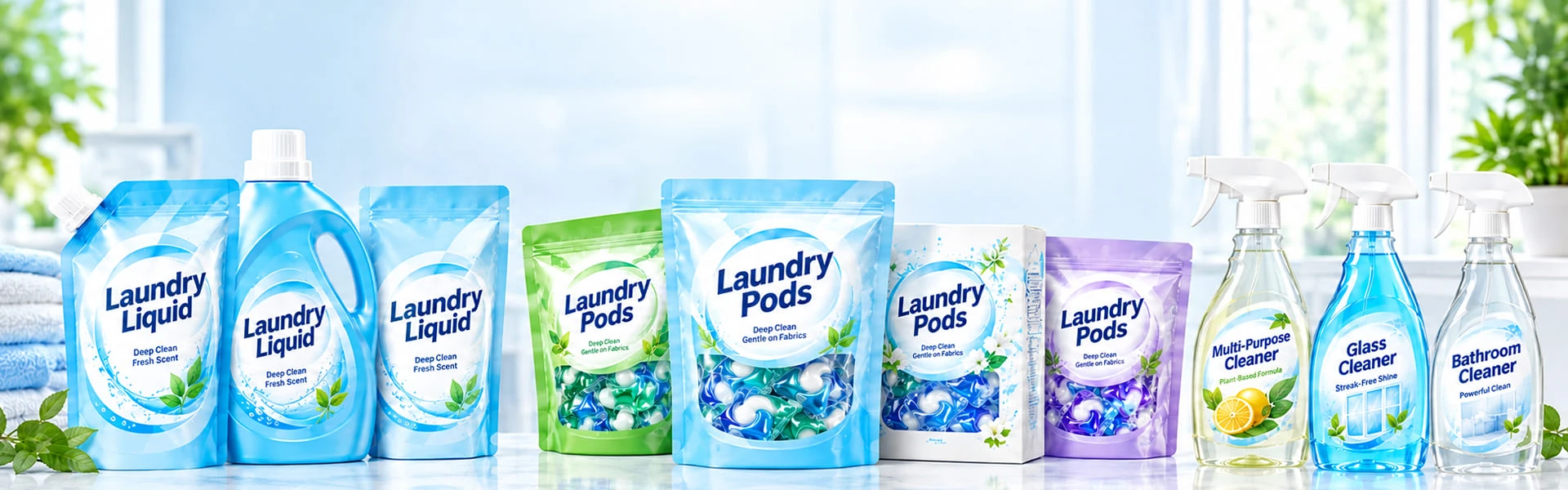
Are Laundry Pods Better Than Liquid Detergent?
Dec 23, 2025
Leave a message
Introduction
Laundry habits have changed a lot over the past decade. Bottles of liquid detergent once dominated laundry rooms, but today, laundry pods also called laundry detergent pods or washing capsules are everywhere. They look simple, compact, and modern, but many buyers still ask the same question:
Are laundry pods really better than liquid detergent, or are they just more convenient?
From a performance, cost, safety, and sustainability perspective, the answer is not one-size-fits-all. The best choice depends on how people wash, what machines they use, and what they value most;convenience, control, price, or environmental impact.
This guide breaks down the real differences between laundry pods and liquid detergent in plain language. The goal is simple: help buyers, brands, and sourcing professionals make a confident, informed decision.


Laundry Pods vs Liquid Detergent
At the most basic level, both products do the same job: clean clothes. The difference lies in how they are used and how they are formulated.
Laundry pods are pre-measured doses of concentrated detergent sealed in a water-soluble film. One pod equals one standard wash.
Liquid detergent comes in bottles and requires manual measuring. Users decide how much to pour based on load size, fabric type, or stain level.
This section is about alignment, not judgment. Understanding these fundamentals makes the comparisons clearer.
Ease of Use
When it comes to daily convenience, laundry pods have a clear advantage.
Laundry pods remove guesswork. There is no measuring, no spills, and no overuse. Users simply place one pod into the washing drum and start the cycle. This consistency makes washing pods especially popular in busy households, shared living spaces, and short-stay accommodations.
Liquid detergent offers flexibility but requires more effort. Users must measure carefully. Too little detergent reduces cleaning performance. Too much can leave residue on clothes or inside the machine. Spills and sticky caps are common complaints.

Cleaning Performance
Cleaning performance depends more on formulation quality than on format, but there are real differences.
High-quality laundry pods use concentrated formulas designed to dissolve fully and release detergent at the right time during the wash. Many washing capsules perform especially well in modern machines and low-temperature cycles, which are common in the UK and Europe.
Liquid detergent performs well on heavily soiled items because users can increase dosage or pre-treat stains directly. For greasy workwear or spot treatment, liquid detergent still has an edge.
However, poor-quality pods can struggle with incomplete dissolution, especially in overloaded machines or very cold water. This is why manufacturing quality matters, not just the product type.
Both formats clean well when properly formulated. Liquid detergent offers more flexibility for tough stains, while laundry pods deliver consistent everyday results.


Cost Comparison
At first glance, liquid detergent usually appears cheaper. Bottles often cost less per unit than laundry pods.
But real cost depends on usage behavior.
With liquid detergent, over-pouring is common. Small excess amounts used in every wash add up over time. Laundry pods eliminate this issue by fixing the dose.
For households with predictable wash loads, laundry capsules often provide better cost control. For large or irregular loads, liquid detergent may be more economical.
For private-label buyers and distributors, cost also depends on sourcing. Custom laundry pods manufactured at scale can narrow the price gap significantly.
Storage & Safety
This is one of the most overlooked differences.
Laundry pods are compact and easy to store, but they require strict safety measures. Their concentrated formula and candy-like appearance can pose risks if not stored properly, especially in homes with children or pets. Secure packaging and clear labeling are essential.
Liquid detergent is bulkier but generally less confusing to consumers. Spills can happen, but ingestion risks are lower when packaging is clear and child-resistant.
From a brand perspective, packaging design plays a critical role in safety perception and compliance.

Sustainability and Environmental Impact
Sustainability increasingly influences buying decisions, especially in the UK and EU.
Laundry pods use precise dosing, which reduces chemical overuse and wastewater impact. Many modern washing capsules use biodegradable water-soluble films and concentrated formulas that lower transportation emissions.
Liquid detergent bottles often rely on plastic packaging and heavier shipping weight. However, refill systems and recycled bottles are improving their environmental profile.
The biggest difference comes from manufacturing choices, not format alone:
- Phosphate-free formulas
- Biodegradable ingredients
- Recyclable or plastic-reduced packaging
Brands that invest in sustainable formulation and packaging outperform others regardless of format.

Why Manufacturing Quality Matters
Not all laundry pods perform the same. When formulation or production standards are weak, problems appear quickly. Common issues include pods that fail to dissolve completely, detergent residue left on clothes, inconsistent cleaning results, or even damage to fabrics after repeated use.
These issues are rarely caused by the concept of laundry pods themselves. They usually come from poor manufacturing control. That is why choosing the right laundry pods manufacturer is critical, especially for private-label brands.
For buyers looking to develop custom laundry pods, experienced factories deliver clear advantages. A reliable laundry capsule factory carefully manages every key step of production, including:
- Film thickness and dissolution speed, ensuring pods dissolve fully in both cold and warm wash cycles
- Formula stability, so cleaning performance remains consistent throughout the product's shelf life
- Batch consistency, which prevents quality variations between production runs
- Packaging moisture resistance, protecting washing capsules from humidity during storage and transport
Strong manufacturing control directly affects user experience, brand reputation, and long-term customer trust.

Overseas Manufacturing Insight
For brands sourcing customized laundry pods for international markets, overseas OEM partners often play an essential role. Youming Group is an example of an established manufacturer that supports private-label buyers with scalable, compliant production solutions.
Key strengths include:
- Customized laundry pods developed for different washing habits, machine types, and water conditions
- Advanced packaging solutions that protect pods during long-distance shipping while supporting sustainability goals
- High-capacity production, allowing brands to scale smoothly from trial orders to full market launches
- International compliance support, with documentation aligned to EU, UK, and US regulatory requirements
By working with a capable OEM like Youming Group, brands can launch competitive laundry capsule products that match retail performance standards while maintaining quality control, safety, and cost efficiency.


Machine Compatibility and Washing Habits
Modern washing machines favor laundry pods. Front-load and high-efficiency machines work well with pre-measured detergent and low-suds formulas.
Liquid detergent remains popular in regions where top-load machines dominate or where hand-washing still plays a role.
Climate and habits matter too. Cold-water washing, common in Europe, favors well-designed washing capsules. Hot-water washing offers more flexibility for liquid detergent.
Choosing the Right Option
There is no single "best"choice between laundry pods and liquid detergent. The right option depends on how people wash their clothes and what they value most in daily use.
Laundry pods are a better fit:
Convenience matters; Pods are pre-measured, mess-free, and quick to use, making them ideal for busy households or shared living spaces.
Wash loads are consistent: If most loads are similar in size, one pod per wash delivers reliable results without guesswork.
Storage space is limited: Pods take up less space than bulky detergent bottles and are easier to store neatly.
Sustainability is a priority: Many modern laundry pods use concentrated formulas and reduced packaging, which helps lower waste and transportation impact.
Liquid detergent is a better fit:
Load sizes vary widely: Liquid detergent allows users to adjust the amount based on small or oversized loads.
Heavy stains are common: Liquids are easy to apply directly to stains for pre-treatment before washing.
Precise dosage control is needed: Users who prefer fine control over detergent strength may feel more comfortable measuring liquid.
Budget sensitivity is high: Liquid detergent often has a lower upfront cost, especially for large households.
For brands and buyers, the decision goes beyond consumer habits. It often depends on product positioning, target market expectations, and the level of manufacturing support available. The right supplier and formulation can make either format successful when aligned with a clear brand strategy.


Final Verdict
Laundry pods are not simply a trend. For many users and markets, they offer a cleaner, simpler, and more controlled way to wash clothes. Liquid detergent still holds value for flexibility and stain treatment, but its advantages depend heavily on user behavior.
The real difference is not pods versus liquid;it is quality versus compromise. Well-made laundry pods, produced by experienced manufacturers and supported by proper packaging and compliance, deliver consistent performance and strong market appeal.
Practical Buying Tips
Test products under real washing conditions, including cold cycles
Compare dissolution and residue, not just cleaning power
Evaluate packaging quality, especially for shipping and storage
Work with manufacturers that offer documentation, testing, and customization
Benchmark against leading retail products before launching
Choosing the right laundry solution is easier when performance, safety, and manufacturing quality align.