

What Is In Laundry Pods?
May 30, 2026
Leave a message

Laundry pods have become one of the most popular laundry detergent formats in recent years. Their convenience, pre-measured dosage, and compact packaging make them an attractive alternative to traditional liquid and powder detergents.
But many consumers still wonder what is actually inside a laundry pod. Are the ingredients different from regular detergents? Are they safe for families? And are they really as environmentally friendly as manufacturers claim?
Understanding the ingredients in laundry pods can help you make better purchasing decisions and choose products that fit your cleaning needs, skin sensitivity concerns, and sustainability preferences.


Main Ingredients In Laundry Pods
Although formulas vary between brands, most laundry pods contain the same core categories of cleaning ingredients.
Surfactants
Surfactants are the primary cleaning agents in laundry pods. Their job is to loosen dirt, body oils, and stains from fabric fibers so they can be washed away during the rinse cycle.
Without surfactants, water alone would struggle to remove greasy soils and everyday grime.
Enzymes
Many modern laundry capsule contain enzymes because they are highly effective at breaking down specific types of stains.
Common examples include:
Protease for protein-based stains such as blood, sweat, and milk
Lipase for grease and oil stains
Amylase for starch-based stains such as sauces and pasta residues
Cellulase for fabric care and color maintenance
The enzyme system is often one of the biggest factors that separates premium laundry pods from lower-cost alternatives.
Builders And Water Softeners
Hard water minerals can reduce cleaning performance. Builders and water-softening agents help prevent calcium and magnesium from interfering with surfactants.
By improving water conditions, these ingredients allow the detergent to work more efficiently and reduce the risk of residue remaining on fabrics.
Fragrances And Preservatives
Fragrances provide the scent many consumers associate with clean laundry. Some products use synthetic fragrances, while others use lighter fragrance systems or fragrance-free formulas designed for sensitive skin.
Preservatives help maintain product stability during storage and transportation, especially in concentrated detergent formulations.
What Is The Outer Film Made Of?
The outer wrapper of a laundry pod is typically made from Polyvinyl Alcohol (PVA), sometimes called PVOH.
This water-soluble film is designed to dissolve during the wash cycle, releasing the detergent inside. The film may look similar to plastic, but it behaves differently when exposed to water.
The quality of the film can influence how quickly a pod dissolves, especially in cold water washing conditions. For this reason, manufacturers carefully select film specifications to balance storage stability, product protection, and reliable performance in the wash.


Are Laundry Detergent Pods Safe?
When used correctly, laundry pods are generally considered safe for household use. However, safety depends on both the formula and how the product is stored. Safety concerns are usually discussed in three areas: skin contact, storage safety, and accidental ingestion risk.
Are Laundry Pods Safe For Skin?
Most consumers can use detergent pods without experiencing skin issues. However, some individuals may be sensitive to certain ingredients, particularly fragrances, dyes, or specific preservatives.
For people with sensitive skin, eczema concerns, or fragrance sensitivities, it is often worth looking for products labeled as hypoallergenic, dye-free, or dermatologist tested.
Are Laundry Pods Safe Around Children And Pets?
Laundry pods are highly concentrated and should always be stored out of reach of children and pets to prevent accidental ingestion or exposure.
For children, the bright color and compact size may increase curiosity, which is why child-resistant packaging and bittering agents are commonly used to reduce risk.
For pets, the main concern is chewing or accidental contact, especially with dogs. Direct exposure to concentrated detergent may cause irritation or digestive discomfort, so secure storage is essential.
Why Some People Experience Irritation
Skin irritation is not usually caused by the pod format itself, but is more often linked to specific ingredients or usage conditions.
Potential triggers may include:
Heavy fragrance systems
Artificial dyes
Certain preservatives
Residual detergent left on fabrics due to overdosing or insufficient rinsing
In most cases, irritation can be reduced by choosing fragrance-free or sensitive-skin formulations, and ensuring proper dosing during the wash cycle.


Are Washing Pods Eco Friendly?
The environmental impact of laundry pods is a topic that receives increasing attention from both consumers and regulators.
The answer depends on which aspect of sustainability you are evaluating.
The Benefits Of Concentrated Formulas
Laundry pods are typically more concentrated than traditional laundry liquid. Because less water is included in the formula, manufacturers can reduce packaging size and transportation weight.
This often results in:
Lower packaging consumption
Reduced shipping emissions
Less product waste from overpouring
For many households, pre-measured dosing also helps avoid using excessive detergent.
The Debate Around PVA Film
One of the most discussed topics is the environmental impact of PVA film.
Supporters point out that PVA is designed to dissolve and biodegrade under appropriate conditions. Critics argue that degradation rates may vary depending on local wastewater treatment systems.
As research continues, many manufacturers are exploring new film technologies and alternative packaging solutions to improve sustainability performance.
Laundry Pods vs Traditional Detergents
Compared with conventional laundry liquid, laundry pods often use smaller packaging and require less transportation space.
However, environmental performance ultimately depends on the complete formulation, ingredient sourcing, packaging materials, and manufacturing practices rather than the pod format alone.

How To Choose Better Laundry Pods
Not all laundry pods are formulated the same way. Looking beyond marketing claims can help you identify higher-quality products.
Check The Ingredient List
A transparent ingredient list can provide useful insight into product quality.
Consider looking for:
Effective enzyme systems
Clearly disclosed fragrance information
Phosphate-free formulas where applicable
Ingredients suitable for your household needs
Choose The Right Formula For Your Needs
Different households have different priorities.
For example:
Families with children may prioritize stain removal performance.
Consumers with sensitive skin may prefer fragrance-free options.
Eco-conscious buyers may focus on packaging and ingredient sustainability.
The best laundry pod is not necessarily the strongest one, but the one that aligns with your specific requirements.
Look Beyond Marketing Claims
Terms such as "natural," "green," and "eco-friendly" are widely used across the industry. While these claims may be meaningful, they do not always provide a complete picture of product performance or safety.
Instead of relying solely on packaging claims, consider evaluating the ingredient system, manufacturer transparency, and product certifications when available.
Conclusion
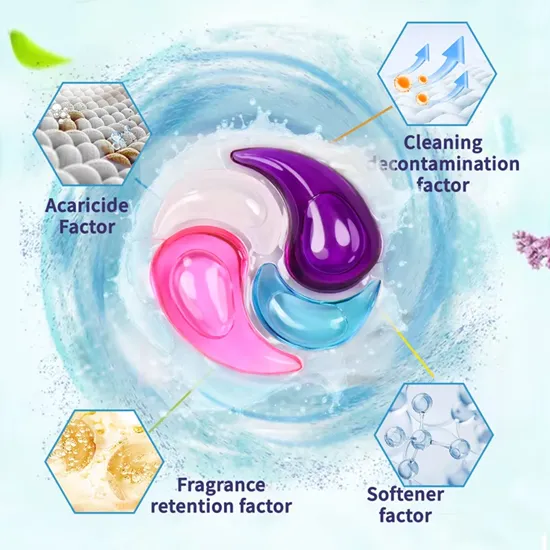
Overall, laundry pods typically contain a combination of surfactants, enzymes, water-softening agents, fragrances, and a water-soluble PVA film. Together, these components are designed to deliver convenient and effective cleaning in a compact format.
Different laundry pod formulations are designed to meet different market needs, including cleaning performance, skin compatibility, and sustainability requirements. A clear understanding of these factors helps buyers choose the right product for their target consumers.