


FAQ About Laundry Pods
Jun 02, 2026
Leave a message

Introduction
Laundry pods have become a mainstream detergent format thanks to their convenience, compact packaging, and pre-measured dosing. Yet despite their popularity, consumers still encounter questions about dissolving problems, residue, cold-water performance, and proper usage.
At the same time, growing consumer demand has encouraged retailers and distributors to launch private label products through OEM laundry pods manufacturers and wholesale suppliers. As a result, understanding how laundry pods work-and why problems occasionally occur-has become important for both end users and brands.
This guide answers the most common questions about laundry pods while explaining the practical factors that affect their performance.
Why Are Laundry Pods So Popular?
Laundry pods solve several common frustrations associated with traditional detergents.
Instead of measuring Laundry liquid or scooping powder, users simply place a pre-measured pod into the washing machine. This reduces spills, simplifies storage, and helps avoid detergent overuse.
For brands and retailers, custom laundry pods also offer opportunities to differentiate products through fragrance options, enzyme systems, stain-removal performance, packaging design, and eco-focused formulations.
However, convenience alone does not guarantee performance. Proper usage remains essential.

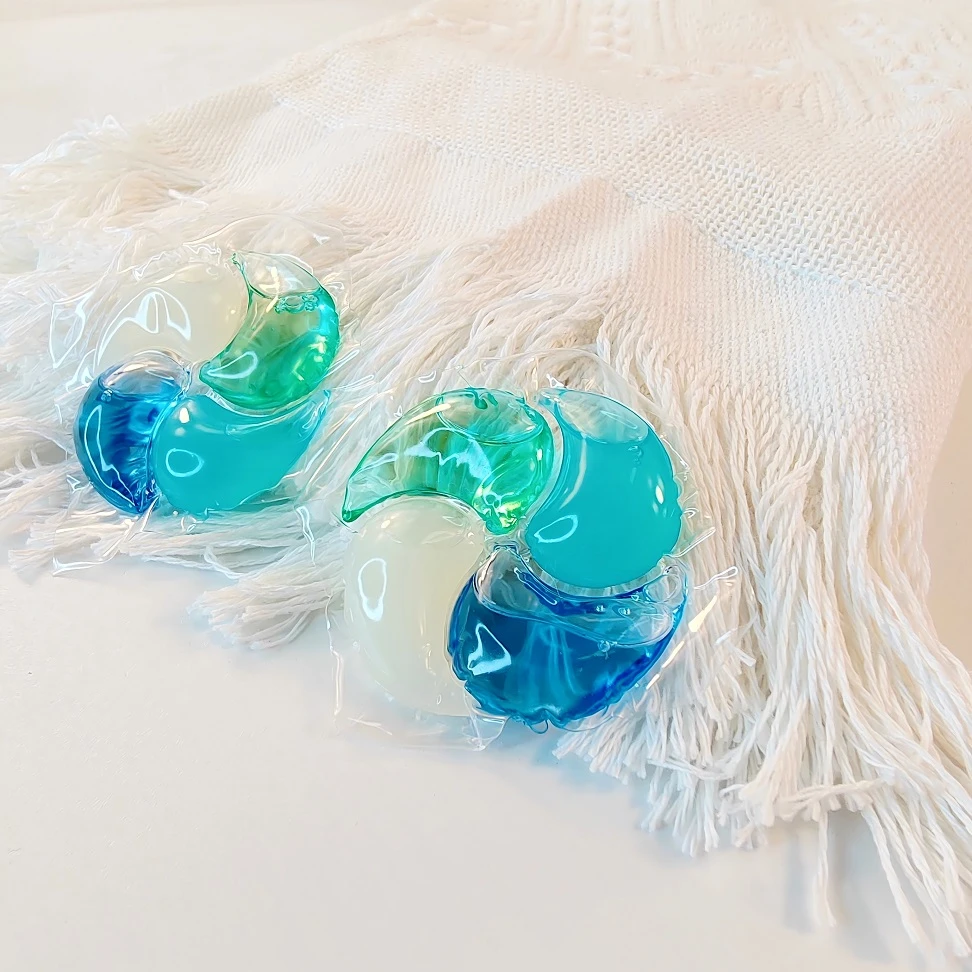
What Is the Correct Way to Use Washing Pods?
One of the most common mistakes is placing the pod in the detergent drawer.
Laundry pods are designed to be placed directly inside the drum before clothes are added.
Correct Placement
- Place the pod in the empty drum so it can contact water immediately.
- Add laundry on top of the pod.
- Start the wash cycle as usual.
This helps the pod dissolve properly and distribute detergent evenly.
Why Placement Matters
When a laundry pod is trapped between clothing layers or placed in a detergent dispenser, water may not reach it quickly enough. This can result in partially dissolved film or detergent residue on fabrics.
Many "bad pod" complaints are actually caused by incorrect placement rather than product quality issues.


Why Won't My Laundry Pod Dissolve?
This is one of the most searched laundry pod questions online.
In most cases, the issue is caused by washing conditions rather than a defective product. Common factors include overloading the washer, using very short wash cycles, and washing in extremely cold water.
The Washer Is Overloaded
Large loads can restrict water circulation inside the drum.
Bulky items such as comforters, blankets, and towels may prevent water from reaching the pod during the early stage of the cycle. When this happens, the outer film may not dissolve completely, leaving residue behind.
The Wash Cycle Is Too Short
Quick wash programs typically use less water and shorter agitation times.
Although many modern laundry pods are designed to dissolve quickly, very short cycles can increase the likelihood of incomplete dissolution, especially when combined with large loads or bulky fabrics.
Cold Water Conditions
Most modern laundry pods are formulated to work in cold water. However, dissolution may take longer when water temperatures are extremely low.
If you regularly wash in cold water, avoid overloading the machine and consider using a standard cycle instead of an express program to give the pod more time to dissolve fully.
If residue remains on clothing after a wash cycle, prompt treatment can usually resolve the issue.
How to Remove Pod Residue
If residue appears on clothing:
- Rinse the affected area with warm water.
- Rewash the garment without adding additional detergent.
- Use an extra rinse cycle if necessary.
In most cases, rewashing the item shortly after the residue appears will remove it successfully.


How Many Laundry Pods Should You Use?
More detergent does not necessarily mean cleaner clothes.
Using excessive detergent is one of the leading causes of residue buildup, poor rinsing performance, and consumer complaints. Laundry pods are pre-measured to provide the right amount of detergent for most household washing machines, making proper dosing simple and consistent.
As a general guideline, use pods based on the size of your laundry load:
|
Load Size |
Approximate Clothing Amount |
Recommended Amount |
|
Small Load |
Up to 6 items |
1 Pod |
|
Medium Load |
7–12 items |
1 Pod |
|
Large Load |
13–18 items |
2 Pods |
|
Heavily Soiled Large Load |
13–18 heavily stained items |
2 Pods |
Keep in mind that clothing size and fabric type can affect the actual load weight. For example, towels, jeans, hoodies, and bedding take up more space and absorb more water than lightweight shirts or activewear.
If clothes are heavily stained, extending the wash cycle or pre-treating stains is often more effective than adding extra pods.


Can Laundry Pods Be Used in Cold Water?
Yes. Most laundry pods are designed to work in cold water, especially as cold wash cycles become more common in energy-efficient households.
However, cold water does not operate in isolation. Pod performance depends on a combination of water temperature, wash cycle conditions, and mechanical agitation inside the drum.
In some cases, cold water may slightly slow down the dissolving process, but it is rarely the only factor affecting performance.
When Cold Water Works Properly
Cold water washing generally performs well when:
- The washing machine is not overloaded
- The wash cycle provides sufficient agitation
- The pod is placed directly in the drum
- The cycle duration is not overly short
Under these conditions, most quality laundry pods will fully dissolve without issues.
When Cold Water May Contribute to Problems
Issues are more likely when cold water is combined with other limiting factors, such as:
- Very large or tightly packed loads that restrict water circulation
- Extremely low incoming water temperatures
- Short or quick wash programs with reduced agitation time
- Pod being trapped inside thick fabrics like towels or bedding
In these cases, incomplete dissolution or minor residue may occur, but cold water alone is usually not the root cause.


Are Laundry Pods Safe for HE Washers?
Yes. Most laundry pods are compatible with high-efficiency (HE) washing machines.
Because pods contain concentrated detergent, they are often suitable for low-water washing systems.
However, users should still follow dosing recommendations. Excess detergent can create unnecessary residue regardless of machine type.
Are Laundry Pods Safe for Septic Systems?
Many laundry pods are marketed as septic-safe and are designed to work with properly maintained septic systems.
As with any detergent product, moderation matters.
Using significantly more detergent than necessary may place additional strain on wastewater treatment processes, whether the detergent comes in pod, liquid, or powder form.


Are Laundry Pods Environmentally Friendly?
Laundry pods are widely used today and are generally considered a practical and efficient detergent format.
Their environmental profile is mainly influenced by three factors: packaging usage, transportation efficiency, and water-soluble film technology.
Reduced Packaging Waste
Compared with traditional Laundry liquids in large plastic bottles, laundry pods typically use significantly less packaging material.
Their compact and concentrated design also improves shipping efficiency by reducing both weight and storage volume, which can help lower transportation-related resource consumption.
Understanding PVA Film
Laundry pods use a water-soluble film called polyvinyl alcohol (PVA), which is designed to dissolve completely during the wash cycle.
This technology allows detergent to be pre-measured into a sealed unit, helping reduce overuse and unnecessary detergent waste during washing.
As a result, laundry pods provide a more controlled and consistent dosing method compared to traditional detergent formats.
Industry Perspective on PVA
PVA is widely used in detergent pods across the global cleaning industry and is designed for use in modern wastewater treatment systems.
It is already a mature material used in many household and industrial applications where water solubility and controlled breakdown are required.
For this reason, it has become a standard component in laundry pod manufacturing.
Overall View
Today, laundry pods are widely adopted by both consumers and brands because they combine convenience, consistent dosing, and efficient packaging design.
For most households, they offer a practical and reliable alternative to traditional detergent formats, especially in regions where cold washing and high-efficiency machines are common.


Laundry Pods vs Laundry liquid
Laundry pods and Laundry liquid both clean clothes effectively, but laundry pods are the better overall choice for most modern households due to their convenience, consistency, and ease of use.
Laundry liquid still works well in certain situations, but it requires more effort, more measuring, and more room for error.
Comparison Overview
|
Feature |
Laundry Pods |
Laundry liquid |
|
Convenience |
Excellent - just toss one pod in, no measuring needed |
Requires manual measuring every time |
|
Dosing Accuracy |
Perfectly pre-measured for consistent results |
Easy to overuse or underuse |
|
Storage |
Compact, clean, and easy to store |
Bulky bottles that take up space |
|
Travel Friendly |
Ideal - lightweight, sealed, and mess-free |
Poor - risk of leaks and liquid restrictions |
|
Dosage Flexibility |
Designed for standard loads with optimized cleaning |
Adjustable, but often leads to waste or inconsistency |
|
Cost Per Load |
Slightly higher, but offsets waste from overdosing |
Can seem cheaper but often leads to overuse |
|
Spill Risk |
Virtually none - fully contained format |
Higher risk during pouring and storage |
While Laundry liquid offers flexibility, it also introduces inconsistency in dosing and a higher chance of user error. In everyday use, this often results in either under-cleaning or detergent waste.
Laundry pods eliminate these issues by delivering the exact right amount every time, making them a more efficient and reliable option for most users.
Which One Should You Choose?
For most households, laundry pods are the clear winner.
They simplify the entire laundry process - no measuring, no spills, no guesswork - and consistently deliver strong cleaning performance across regular wash loads.
Laundry liquid may still be suitable for users who prefer manual control over dosing, but for convenience, consistency, and everyday efficiency, laundry pods are the more practical choice.
In short: if you want easier laundry and more reliable results, laundry pods are the better option.

FAQ
Can I Put Laundry Pods in the Detergent Drawer?
No. Laundry pods should be placed directly inside the drum before adding clothes.
Why Do Laundry Pods Leave Blue or Green Stains?
These stains are usually caused by incomplete dissolution when the laundry pod becomes trapped in fabric or receives insufficient water exposure.
Do Laundry Pods Expire?
Most laundry pods remain effective for several years when stored in a cool, dry environment.
Are Laundry Pods Safe for Baby Clothes?
Many brands offer fragrance-free and sensitive-skin formulations suitable for baby clothing. Always check product-specific recommendations.
Can Laundry Pods Be Used in Hard Water?
Yes, although cleaning performance may vary depending on water hardness and detergent formulation.
What Should I Do If a Child Swallows a Laundry Pod?
Seek immediate medical assistance and contact your local poison control center. Laundry pods should always be stored out of reach of children and pets.
Are Laundry Pods Better Than Laundry liquid?
Not necessarily. Pods offer convenience and consistent dosing, while Laundry liquids provide greater flexibility for adjusting detergent amounts.
Final Thoughts
Most laundry pod problems-including residue, staining, and incomplete dissolving-can be traced back to washing conditions such as overloads, short cycles, or incorrect placement.
When used correctly, laundry pods provide a convenient and effective alternative to traditional detergents. Whether you are a consumer comparing detergent formats or a business evaluating OEM laundry pods suppliers for a private label project, understanding the factors behind pod performance can help you make more informed decisions.