

Best laundry pods for odor
Nov 27, 2026
Leave a message

A louder scent is not a cleaner shirt. Sometimes it is a cover-up. Clothing odor usually traces back to sweat, body oils, detergent residue left in the fibers, or laundry that stayed damp too long. The best laundry pods for odor deal with those sources first and add an odor-management system matched to the problem. Fragrance can finish the job. It should not be doing the job.
Odor-control laundry pods are pre-dosed detergent units built to remove odor-causing soils and manage residual smells, with fragrance as an optional layer. They suit brands selling for sportswear, towels and commercial linen. The main point for a private label spec: choose the formula by odor source and wash conditions, then choose the scent.

The best laundry pods for odor clean first and add scent last
Effective odor-control pods remove the soils that hold smell, then use targeted ingredients against what remains. Fragrance sits on top as a finishing choice. The order matters. A strong perfume can mask residue for a day, while the fabric keeps the oil and sweat that will smell again after the next wear.
The usual belief is that more fragrance means better odor removal. In practice, heavy perfume on a poorly cleaned load can make the problem harder to notice and easier to repeat.
Enzymes and surfactants remove the soils that smell
Surfactants are surface-active agents that help water wet the fabric, loosen soil and hold it in suspension until the rinse. Enzymes are proteins that break specific soils into smaller pieces the wash can carry away. Protease targets protein residues such as sweat and skin cells. Lipase works on fats and body oils.
Synthetics are the hard case. Polyester tends to attract body oils, and a cool, short cycle may not lift them fully. Leftover oil holds odor compounds and releases the smell again when the fabric warms up during wear. So check that the enzyme package and surfactant blend were chosen for the wash conditions customers actually use, not for a lab cycle.
Odor-control ingredients work on specific odors
An odor neutralizer is an ingredient that binds, traps or chemically changes certain odor molecules instead of covering them. Families used in household products include cyclodextrins, which can hold some odor molecules inside a ring-shaped structure, and zinc ricinoleate, which can capture certain sulfur and nitrogen compounds. Each works on selected compounds under certain conditions. None removes every smell. Performance depends on the full formula, the dose and the target odor.
Fragrance shapes the fresh-laundry impression
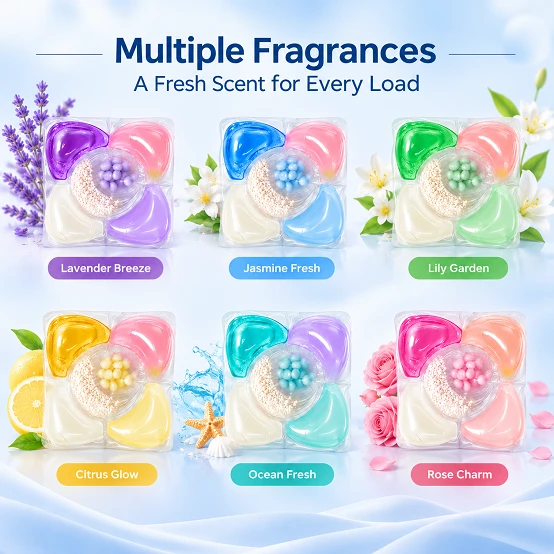
Free fragrance is perfume oil carried in the formula. It scents the wash and the wet load, then fades as it evaporates. Fragrance encapsulation places perfume inside tiny capsules that deposit on fabric and break with friction, so scent is released over time. Both are valid choices. Neither proves the odor-causing residue has gone.
The table below sets out what each part of the system does and what it can honestly support on a pack.
| Function | Main role | Formulation consideration | Claim limits |
|---|---|---|---|
| Enzymes | Break down protein and fat soils | Stability in liquid; wash temperature | Supports cleaning claims |
| Surfactants | Loosen and suspend soils | Cold-water performance; foam level | Supports cleaning claims |
| Odor-control ingredients | Bind or neutralize selected odor compounds | Match to target odor | Only tested odors and conditions |
| Free fragrance | Scent during wash and drying | Dose; allergen labelling | Freshness wording, not odor removal |
| Encapsulated fragrance | Scent released during wear | Capsule stability in pod liquid | Long-lasting scent, not cleanliness |
Most odor results are decided by the first three rows; the fragrance rows decide how a clean result is perceived.
Laundry pods for smelly clothes and sportswear need a different focus than towel or linen pods
No single formula suits every odor equally well. Fabric, odor source and wash conditions should set the priorities.
Synthetic sportswear holds sweat and body oil
A brand selling for gym and running wear is dealing with polyester and elastane that hold body oils after a cold wash. The brief should put protease and lipase selection first, with surfactants that work at the cool temperatures this laundry usually sees. Look for sample evaluation on worn synthetic fabric, not only cotton swatches. Encapsulated fragrance is an add-on here. Not the fix.
Towels and damp loads turn musty
Musty odor usually comes from laundry left damp, slow drying, or microbial growth in fabric and machines loaded with residue. For a towel-focused line, the priorities are soil removal, a clean rinse and low residue. If the range includes a fabric softener, check it against towel absorbency, since heavy softener deposits can reduce absorbency and hold residue. And no pod rescues towels left wet in the drum overnight.
Commercial linen wants a neutral result
Hotels, laundries and linen suppliers often want sheets that smell of nothing in particular. Guests vary in sensitivity, and strong perfume can read as covering something up. Fragrance-free or low-scent formulas, consistent dose per pod and stable results across repeated cycles matter more than scent intensity. Ask how the formula behaves after many washes, including any build-up on fabric.


Killing bacteria does not remove odor already on the fabric
The common belief is that an antibacterial pod is the strongest odor fix. The reality is narrower. Washing removes soil and can reduce some microorganisms through dilution and rinsing, but that does not make a pod an antibacterial product. Odor compounds that bacteria already produced, along with the oils holding them, can stay on fabric after the bacteria are gone.
Claims are the second issue. Antibacterial, sanitizing or bacteria-reduction wording needs suitable testing and must meet the destination market's rules. In the EU, biocidal claims may bring a product under the Biocidal Products Regulation (EU) No 528/2012. In the US, pesticidal claims generally fall under EPA oversight. Treat antibacterial ingredients as one possible tool, not the answer to every laundry smell.
Cold water and pod film decide whether the formula gets to work
The water-soluble film around a pod is usually polyvinyl alcohol (PVA), a polymer that dissolves in water and releases the liquid inside. If the film dissolves slowly in cold water or in an overloaded drum, the formula reaches the wash late and part of the cycle is lost. For an odor-control spec, review these points:
Formula performance at the wash temperatures common in your market
Enzyme selection for those temperatures and cycle lengths
Film grade, dissolution and release in cold water
Ingredient compatibility in single- or multi-chamber designs
A multi-chamber pod is a pod with two or more sealed compartments that keep selected ingredients apart until the wash. That helps with compatibility. But chamber count alone does not decide cleaning or odor-control performance. The formula does.
Four mistakes weaken most odor-control pod briefs
The first is writing the brief around a fragrance name. The scent gets approved on a sniff test, and the cleaning system is whatever comes with it. Test the formula on soiled, worn fabric before the scent decision closes.
Another is approving samples washed warm when the market washes cold. Results from a warm lab cycle may not carry over to a cool home cycle with a full drum.
Then there is printing claims ahead of evidence. "Eliminates odor" or "antibacterial" on artwork without data behind it creates a relabelling risk, and in some markets a regulatory one. Write the claim after the results.
The last is treating extra perfume as free value. Higher fragrance load can add allergen labelling duties, for example under the EU Detergents Regulation (EC) No 648/2004, and it can put off commercial users who want a neutral result.
Choosing a spec for private label odor control laundry pods starts with the odor
Name the main odor complaint first, because sweat, mustiness and general wear odor pull the formula in different directions. Check the wash temperatures and water hardness in the destination market; they shape enzyme and surfactant choice. Decide the pack claim early, since it sets the testing plan. Choose scent level after that. Format and packaging come last, once the formula is clear.
| Spec item | Options | What it affects |
|---|---|---|
| Odor-control direction | Sweat, musty, general laundry odor | Formula priorities |
| Formula system | Enzymes, surfactants, odor-control ingredients | Cleaning and odor-management performance |
| Fragrance profile | Scented, low-scent, fragrance-free | Market positioning |
| Pod design | Single-chamber, multi-chamber | Formula compatibility |
| Pod weight | Project-specific options | Dose and positioning |
| Color and shape | Customized combinations | Product appearance |
| Packaging | Pouches, tubs, boxes | Retail presentation and logistics |
The top three rows carry the performance; the rest mainly shape cost and shelf presence. Confirm the final spec through formula review and sample evaluation. A useful rule of thumb: if the scent was chosen before the odor target, the brief is upside down.
Documents support a claim but do not prove odor removal
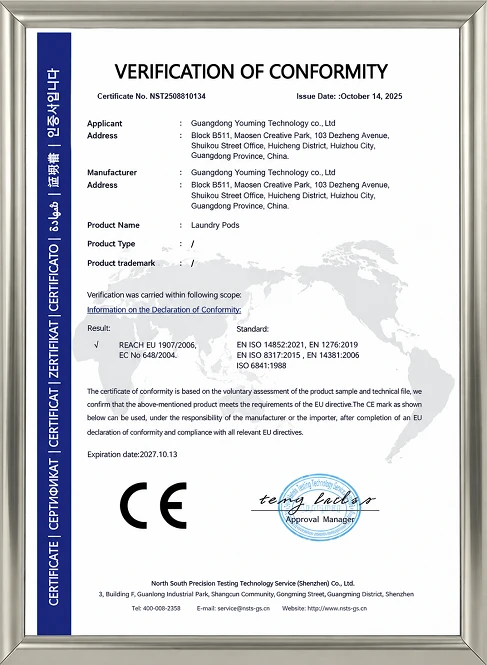
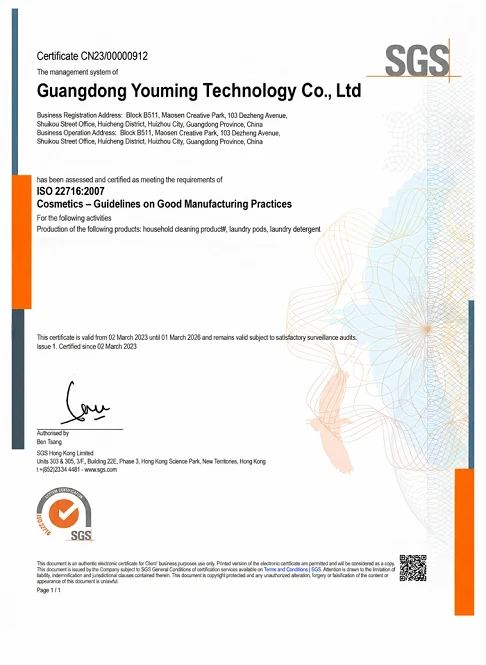
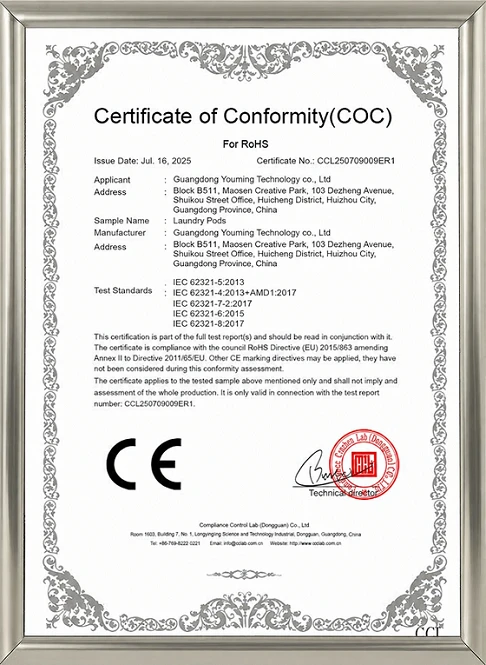
Every pack claim should match the actual formula and the test results you hold. If you plan to sell odor eliminating laundry pods, performance and odor testing on soiled or worn fabric is what supports that wording. A Safety Data Sheet (SDS) gives hazard and handling information. A Certificate of Analysis (COA) confirms agreed quality parameters for a batch. For the EU, documentation under REACH (Registration, Evaluation, Authorisation and Restriction of Chemicals) covers the substances used. Management-system certificates such as ISO 9001 or ISO 22716 describe how a plant controls quality. None of these papers proves a product removes odor, so ask for performance data separately.





An OEM/ODM laundry pod project moves in six stages
A private label odor-control pod usually follows the sequence below. How long each stage takes depends on the project.
| Stage | What you provide | What happens next |
|---|---|---|
| Project brief | Target market, odor concern, product concept | Requirements review |
| Formula and fragrance selection | Formula direction and scent profile | Options review |
| Sample development | Confirmed project specifications | Sample arrangement |
| Artwork | Packaging design and label information | Artwork review |
| Production | Approved sample and order details | Manufacturing |
| Shipment | Confirmed shipping requirements | Order dispatch |
Unclear inputs cost the most time at the brief and artwork stages, so settle the odor target and label text early.
Guangdong Youming Technology Co., Ltd. in Huizhou, Guangdong develops OEM/ODM laundry pods with custom formula, fragrance, shape, color, weight and packaging. Samples are free, with freight paid by the buyer. Overall OEM/ODM lead time is about 40 days once the project is confirmed, and SDS and COA are supplied per order.
FAQ
What laundry pods remove odor best on gym clothes?
Pods with strong soil removal and an enzyme and surfactant system chosen for sweat and body oils, working at the cool temperatures gym kit is usually washed at. Results still depend on fabric and wash conditions.
Do enzyme laundry pods work in cold water?
They can, if the enzymes and film are selected for it. Ask for sample results at your market's usual wash temperature.
Can odor-control laundry pods be fragrance-free?
Yes. The cleaning and odor-management ingredients do the work without added perfume.
Why can't the MOQ be quoted before the brief is settled?
MOQ depends on formula, pod design and packaging, and none of those is fixed until the brief is. A standard formula in a stock tub is a very different run from a new multi-chamber pod in a printed pouch. Share the brief and the MOQ is confirmed for that specific project.
Name the odor before the scent
Which smell are your customers actually trying to get rid of: sweat trapped in polyester, mustiness in towels, or any scent at all on hotel linen? Send that answer, with your market, pack format and rough quantity, to business@youminggroup.com, and our team will reply with a plain view on formula direction, samples and pricing.